LUXOBAGS

Materials and Environmental Claims for Our Bags

If you want disposal instructions on a bag, send the proposed wording before we print it. We need to know which film and closure you have chosen, where the bag will be used and what evidence that wording requires.
The plain reverse of a long white flat bag laid on a dark background.

The leaf symbols on sample bags are printed artwork. The material specification identifies the selected film grade.

What We Can Check in the Factory

We can identify the compound we receive and check the film and bag made from it. The European Commission’s guidance distinguishes material origin, the conditions needed for biodegradation and the requirements for composting.

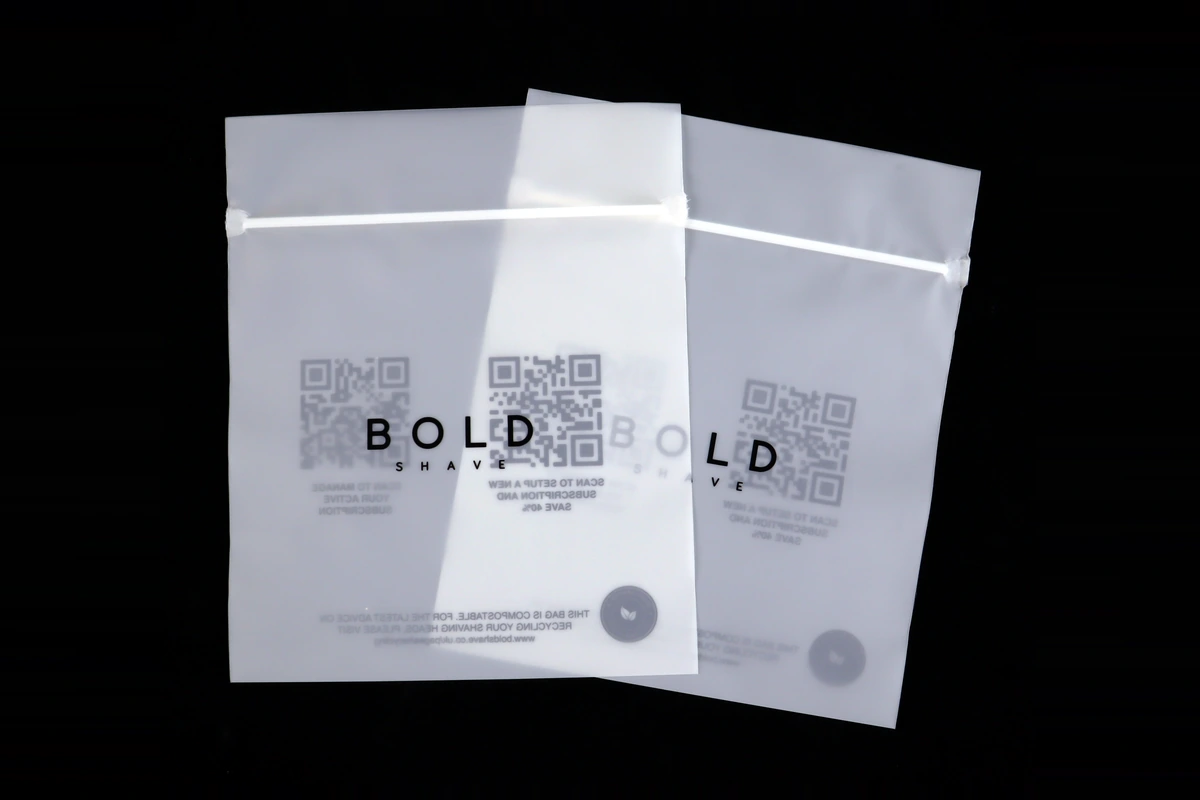
Two frosted zipper bags with black BOLD printing and square QR codes.

How the Bag Will Be Used

What goes into the bag, and how will someone lift or empty it? The answers help us choose the size, gauge and construction before we discuss wording for the pack.
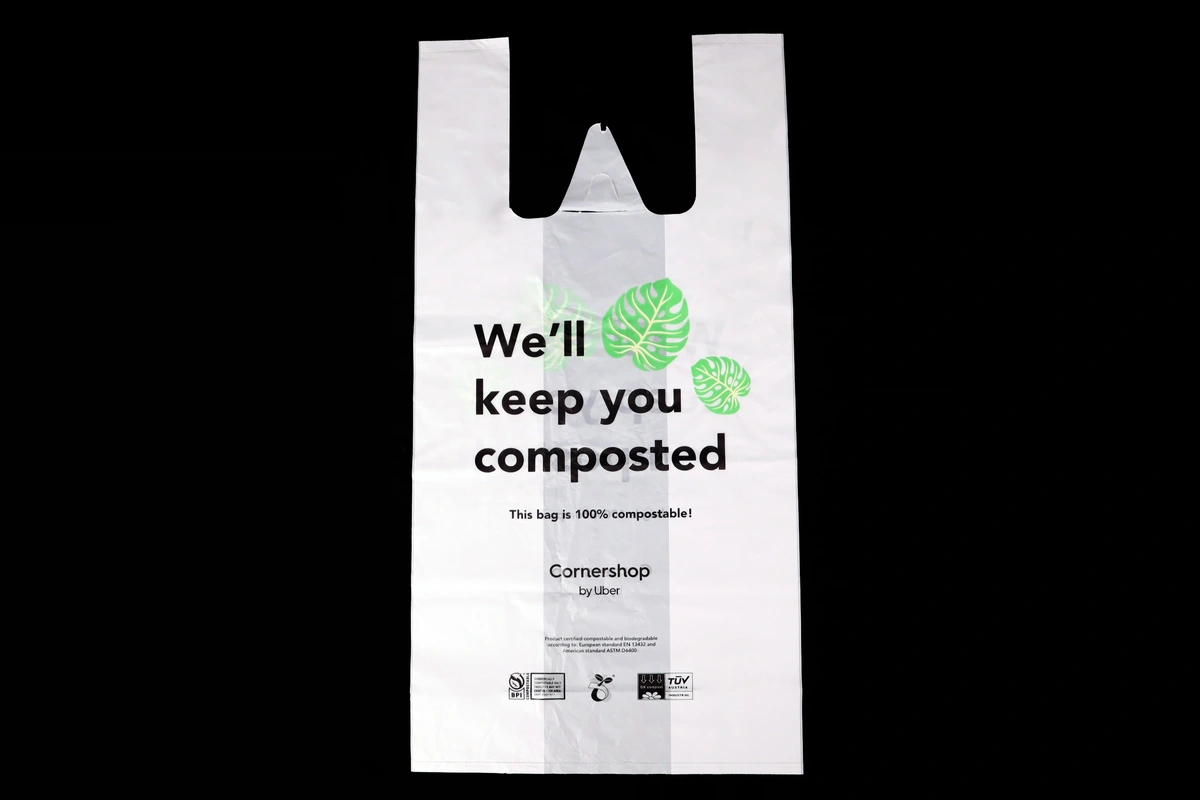
A white leaf-printed shopping bag with angled handles laid on a dark background.

The Compound We Receive

We buy prepared film compounds. At receiving we check the supplier’s grade and batch against the material selected for the order.
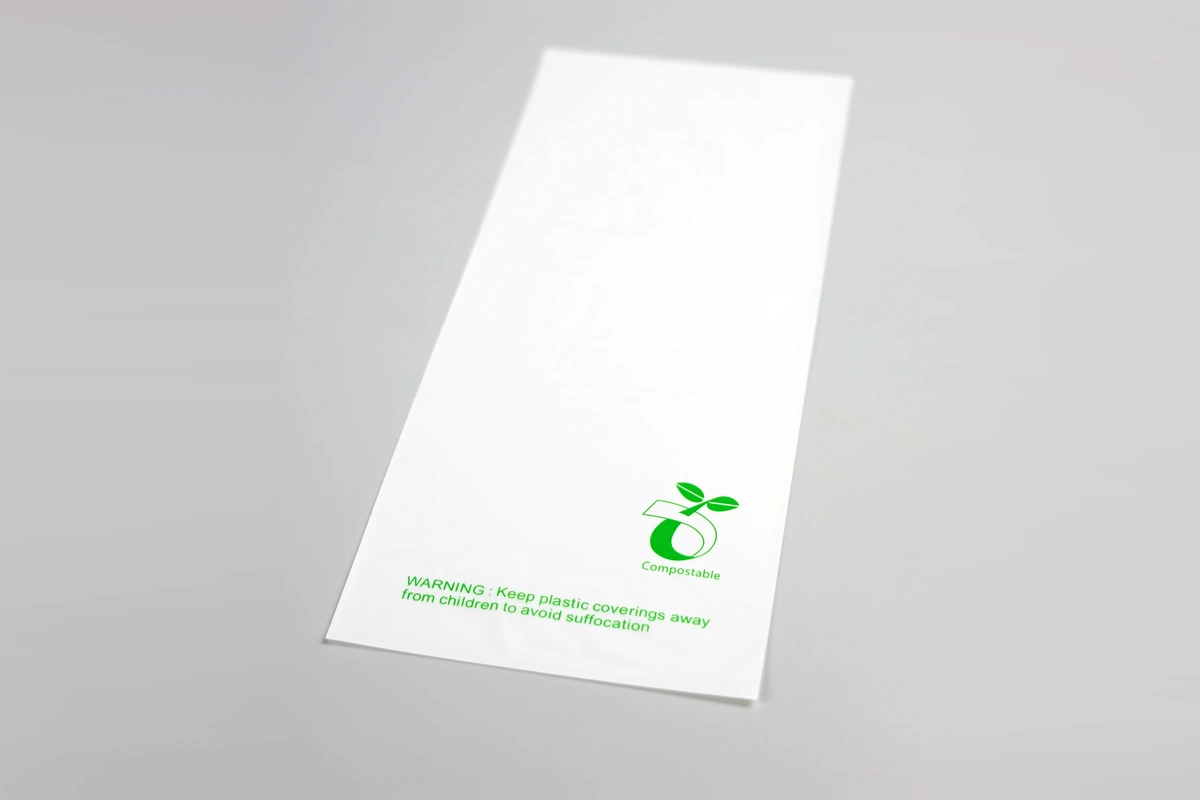
A long white flat bag with a green sprout graphic placed diagonally on light gray.

The Bag We Produce

We check the film on the line, then inspect the print, seams and finished bag. Before dispatch we check that the labels and quantities identify the correct order.
A white die-cut handle bag with a black beverage-cup illustration and red print.

Specifying a Starch-Based Bag

Our cornstarch bag range uses starch-based blends. To specify one, give us the intended use, finished dimensions and any wording that will appear on the film. The grade selected for your order determines its composition.
  • Describe the Contents
    A garment sleeve needs enough room for the folded item to pass through the opening. A liner has to fit over a bin rim. A mailer needs space to close after packing.
  • Give the Size and Film Gauge
    State width and length with units, plus any gusset or flap. We quote thickness in microns for both bag walls together. If your drawing gives a single-wall figure, mark it as such.
  • List the Other Components
    Include ink, color, a closure and any adhesive in the specification. A claim printed on the bag applies to the product with those components in place.
A translucent garment bag carries the red words “GIVE A SECOND LIFE TO THIS BAG.”

Before You Print a Disposal Claim

We do not currently have finished-product compostability certificates or test reports. If your buyer or collection program requires a certificate, raise that requirement before approving the artwork.

  • Describe the Composition
    A starch-based blend contains more than its name tells you. Ask for the grade and evidence for any specific percentage of plant-derived content or plastic-free claim.
  • Check What the Evidence Covers
    Look for the finished bag’s thickness, inks, color and closure in the scope of the evidence. A supplier document may cover only the unprinted compound.
  • Check Local Collection Rules
    Ask the operator receiving the waste whether it accepts that bag. Organics and recycling collections have different acceptance rules.

Have Wording for a Label or Bag?

Send the proposed text, destination market and bag specification together. If a retailer or waste collector has given you a written requirement, include it with the artwork.

Email the Proposed Wording

Material and Disposal Questions

We check the compound grade and batch on arrival, the film and bag during production, and the finished goods and labels before dispatch. The batch number gives us a reference to match to the specification.
Biodegradation is breakdown by biological activity under particular conditions. Compostability describes biodegradation under specified composting conditions. A third term, biobased, describes where the material came from.
We have no evidence that our finished bags are suitable for a home compost pile. Use the collection instructions for your area. The EPA guidance explains which items belong in a home compost pile.
Identify the particular material or disposal benefit you want to describe and the evidence for it. The FTC Green Guides (16 CFR Part 260) explain how environmental claims are assessed in the US. Share the draft wording with us before approving the print.
We currently have no finished-product compostability certificates or test reports. If certification is a purchase requirement, tell us the standard and the market before you select a bag.