LUXOBAGS
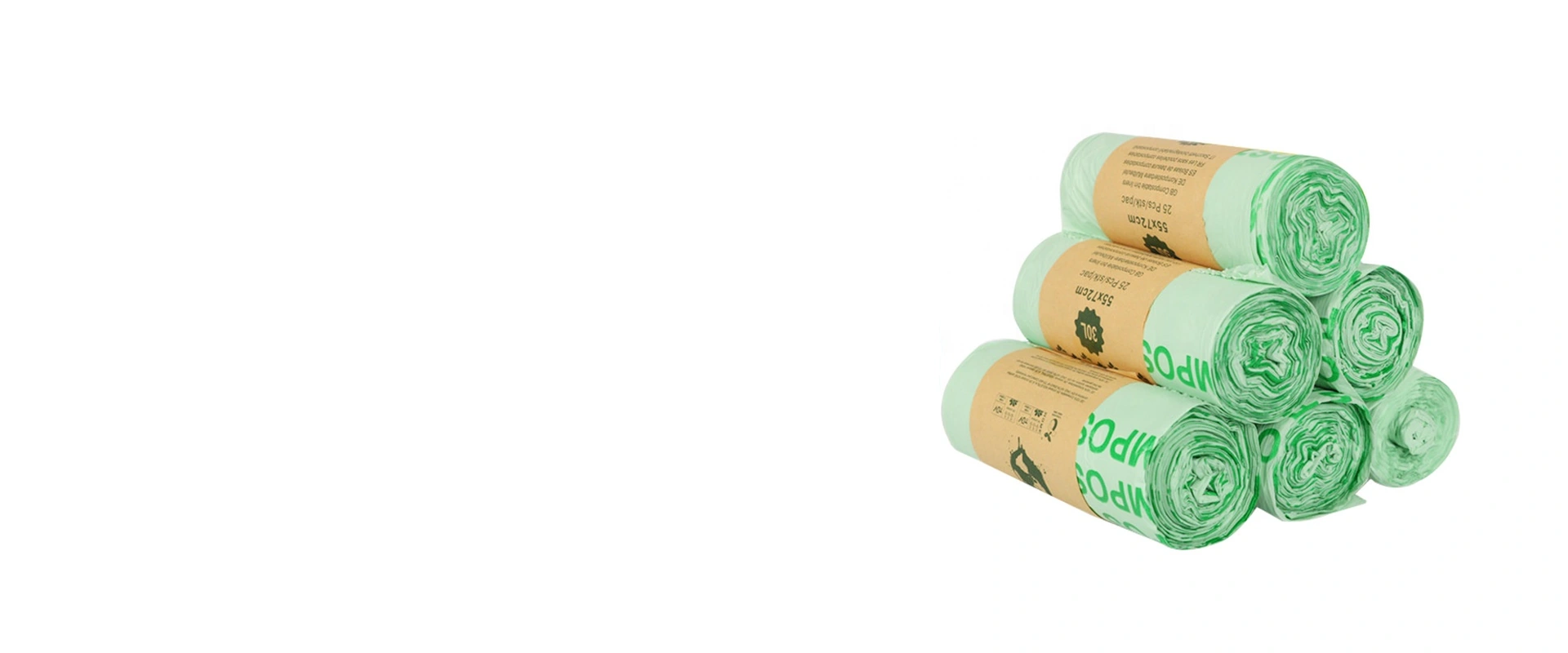
A pyramid of pale green bag rolls with tan paper labels and green printing.

BINS AND LINER ROLLS

Custom Biodegradable Trash Bags

A liner has to reach the bin floor, fold over the rim and leave enough film to close after use. We make flat-top and drawstring liners, including bags on perforated rolls.

Loose bags or rollsFrom 1,000 pcsExisting samples free

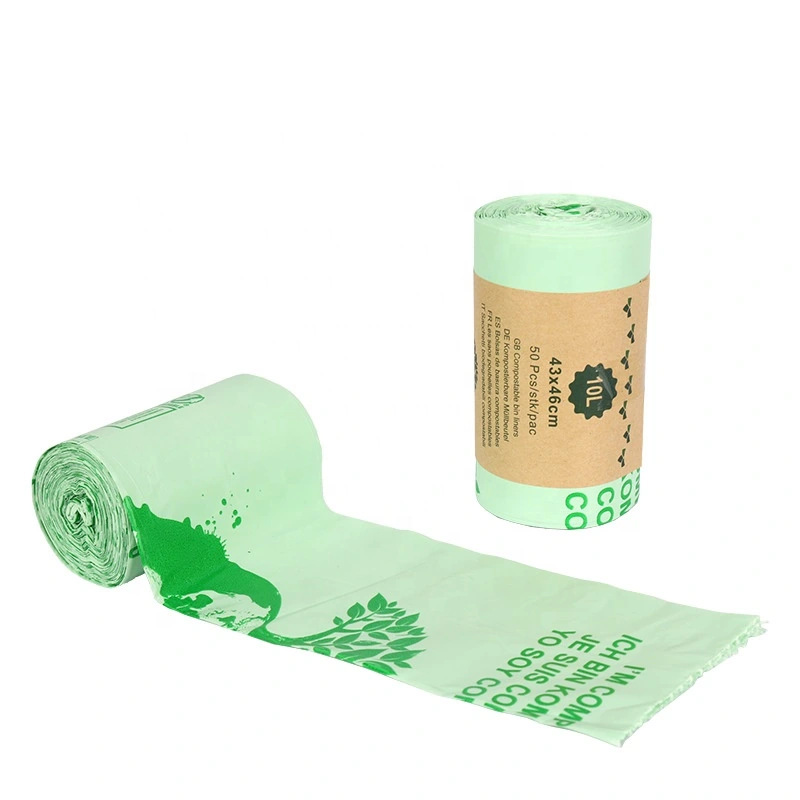
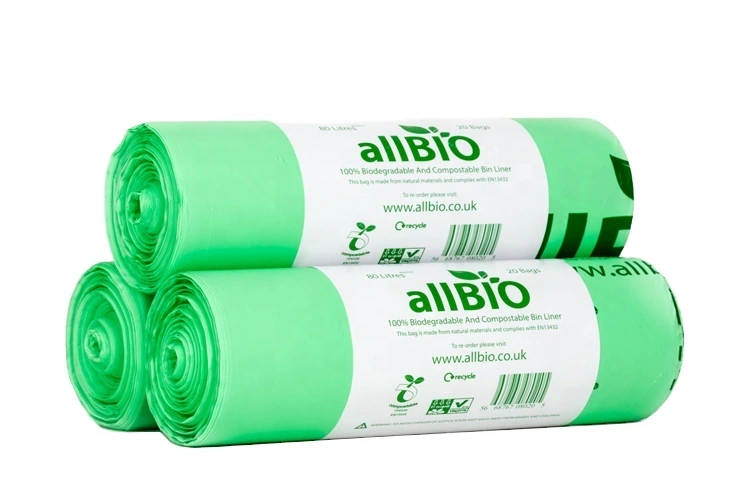
The paper bands on these rolls identify the refill packs. State the number of individual bags you want on each roll.
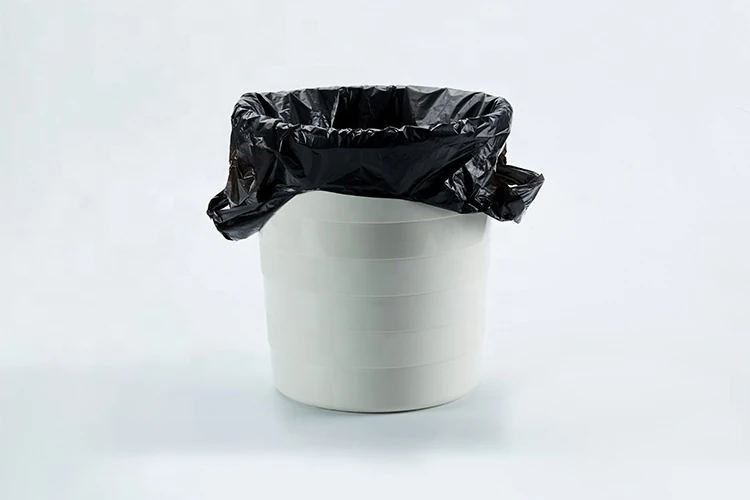
A black liner folds over the rim of a small pale gray bin.

Measurements for a Liner Quote

  • The minimum order is 1,000 individual bags.
  • Give us the rim measurements, bin depth, closure and bottom seal. Specify loose bags or rolls.
  • Choose the bag color and any markings your collection team needs.
  • Tell us what goes in the bin and how heavy a full liner is when staff remove it.
  • We do not currently have finished-liner compostability certificates or test reports.

Making a Liner to Fit Your Bin

A short, wide bin can hold the same volume as a tall, narrow one. We size the opening around the rim and the length around the full depth.

Start at the Rim

Send the rim measurements, bin depth and a photo or sample of the liner you use now. Include how much film staff need to fold over the rim.

Set the Film Width

We blow the chosen compound into film and check the width, thickness and appearance before forming the liners.

Form the Top and Base

Choose a flat opening or drawstring at the top. We make the bottom seal to the agreed construction and check it on the filled liner.

Perforate and Wind

For roll orders, we perforate the film between bags, wind the agreed count and check that a liner tears off cleanly.

Lift a Filled Sample

Line the actual bin, fold the edge over the rim and fill it with the usual contents. Close and lift the sample to check the length and bottom seal.

Count and Mark the Cartons

We check bags per roll and rolls per carton against your order. For mixed sizes, carton marks identify which refill belongs at each bin.

Liner Rolls, Openings and Closures

A roll band keeps the refill together. A drawstring belongs to the individual liner and closes the top when you lift it out.

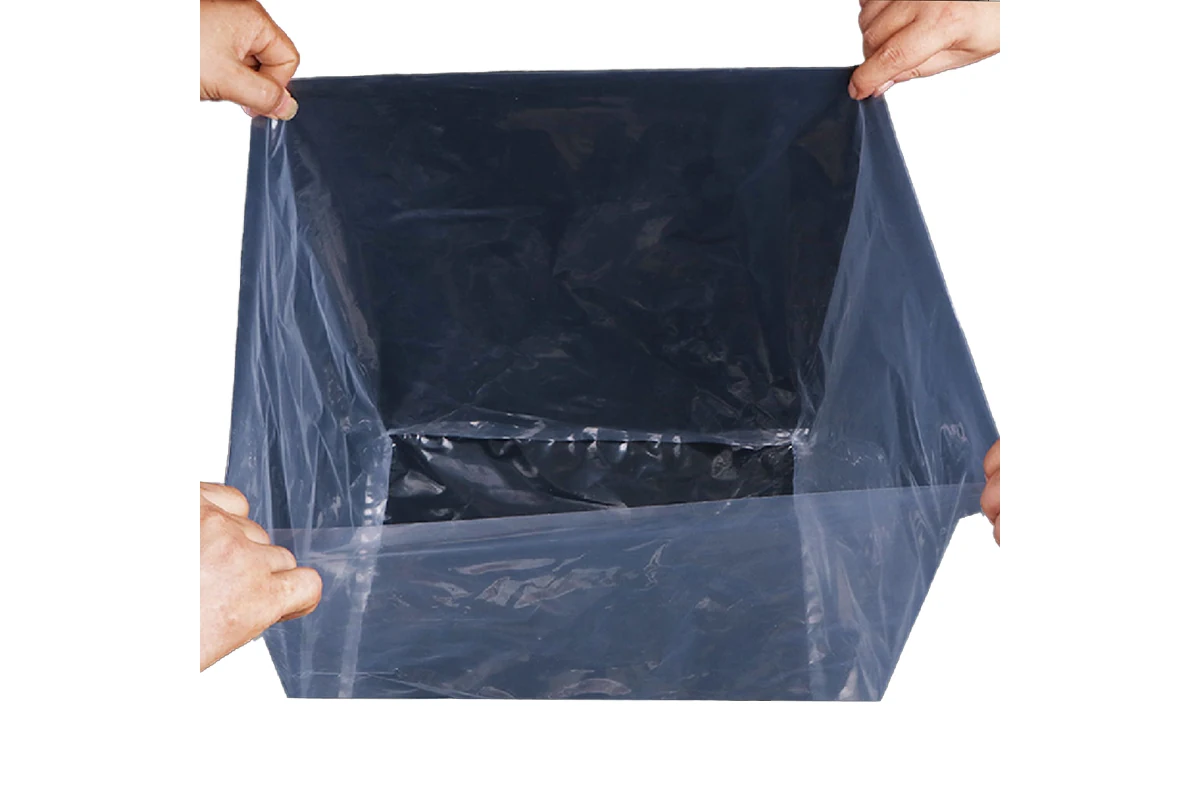
Four hands hold a dark liner open, showing all four corners of the bag.

Choose the Opening and Bottom Seal

The base carries the filled load. The top needs enough room for the way staff close and lift the liner.

  • Flat top
    Choose enough length above the rim to gather or tie the liner when the bin is full.
  • Drawstring
    A drawstring gathers the opening for removal and closure.
  • Star-seal base
    A gathered base changes how the bottom opens inside the bin.
  • Lifting the liner
    Fill the sample in its bin and watch the bottom seal as you lift it out.

Why Liters or Gallons Are Not Enough

Bins with the same capacity can have different openings and depths. Use the trash-bag size guide to record the dimensions and allowances needed for a liner.
  • Opening width
    Bag width must cover the bin opening without excessive stretching.
  • Bin depth
    Measure to the floor of the bin, then add the length you need above the rim.
  • Capacity reference
    Share the bin capacity together with its dimensions, not as a substitute for them.
  • Measurement units
    Use millimeters (mm) for bag width and length so the sample specification is clear.
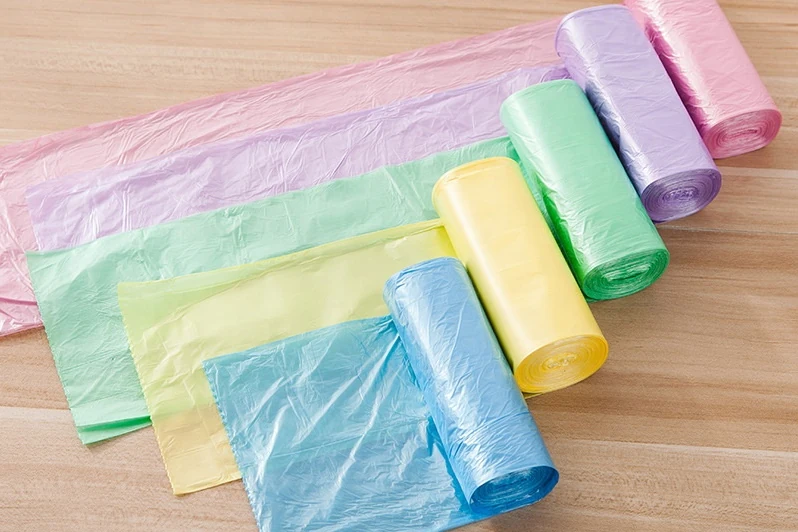
Pink, purple, green and blue liner rolls are partly unrolled on a wooden surface.
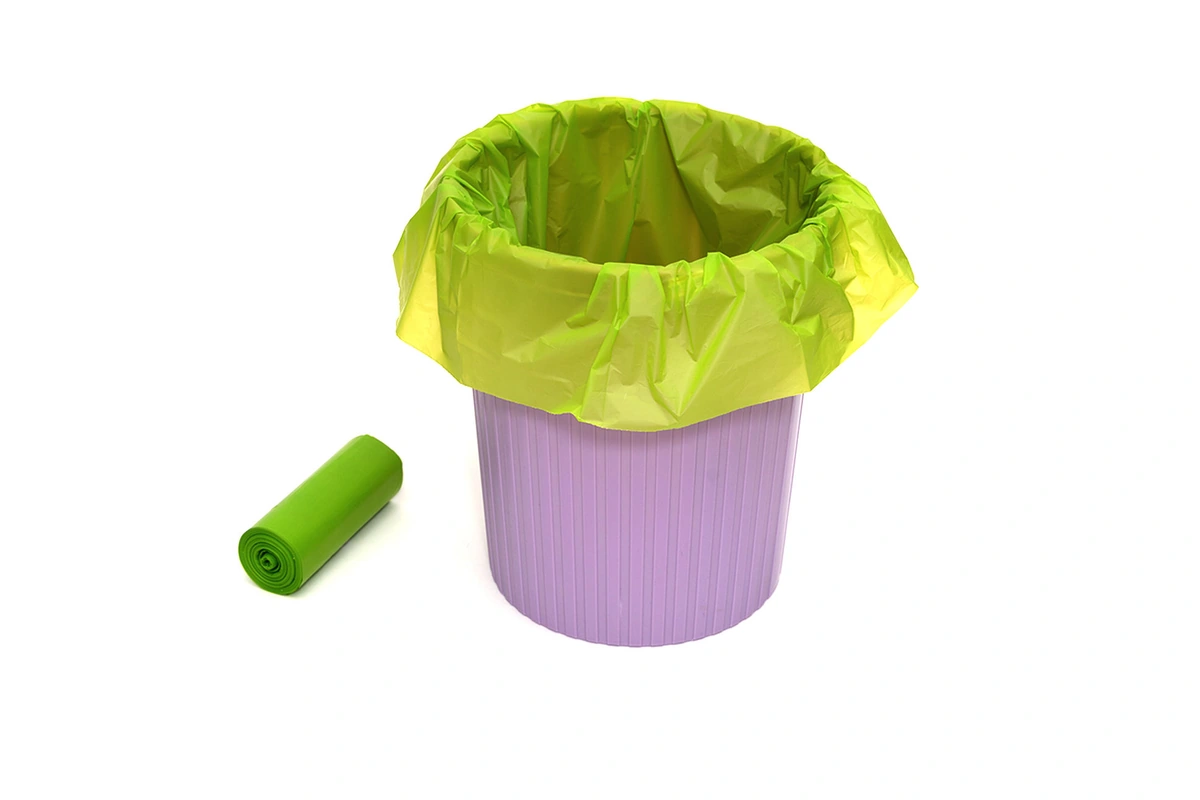
A green liner fitted over the rim of a purple waste bin, with a spare roll beside it.

Describe the Load Before Choosing Microns

Wet waste and bulky offcuts put different demands on the base. Describe the contents and lifted weight when asking us to review the film and seal.
  • Waste type
    Dry office waste and heavier mixed waste place different demands on the liner.
  • Thickness
    Specify thickness in microns (µm), or send a reference bag for comparison.
  • Load requirement
    State the expected contents and weight so the sample can be reviewed in use.
  • Material formula
    The compound, film thickness and seal work together; thickness alone is not a strength guarantee.
Two green bin liner rolls with white allBio paper bands.

Make the Roll Count Unambiguous

List the total bag quantity first. Then give the packing unit, such as bags per roll and rolls per carton.
  • Bags per roll
    Set the bag count to match your refill or retail unit.
  • Perforation
    The tear line separates one bag from the next; review it on the sample roll.
  • Roll size
    Check the wound width and diameter against the holder you use.
  • Finished roll size
    Bag dimensions, thickness and count all affect the finished roll diameter.
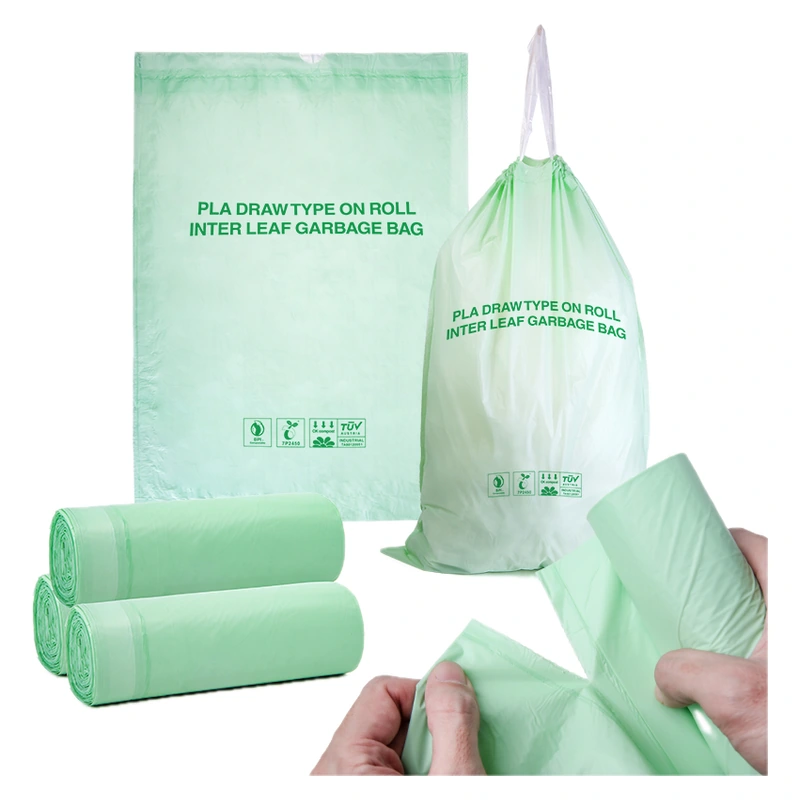
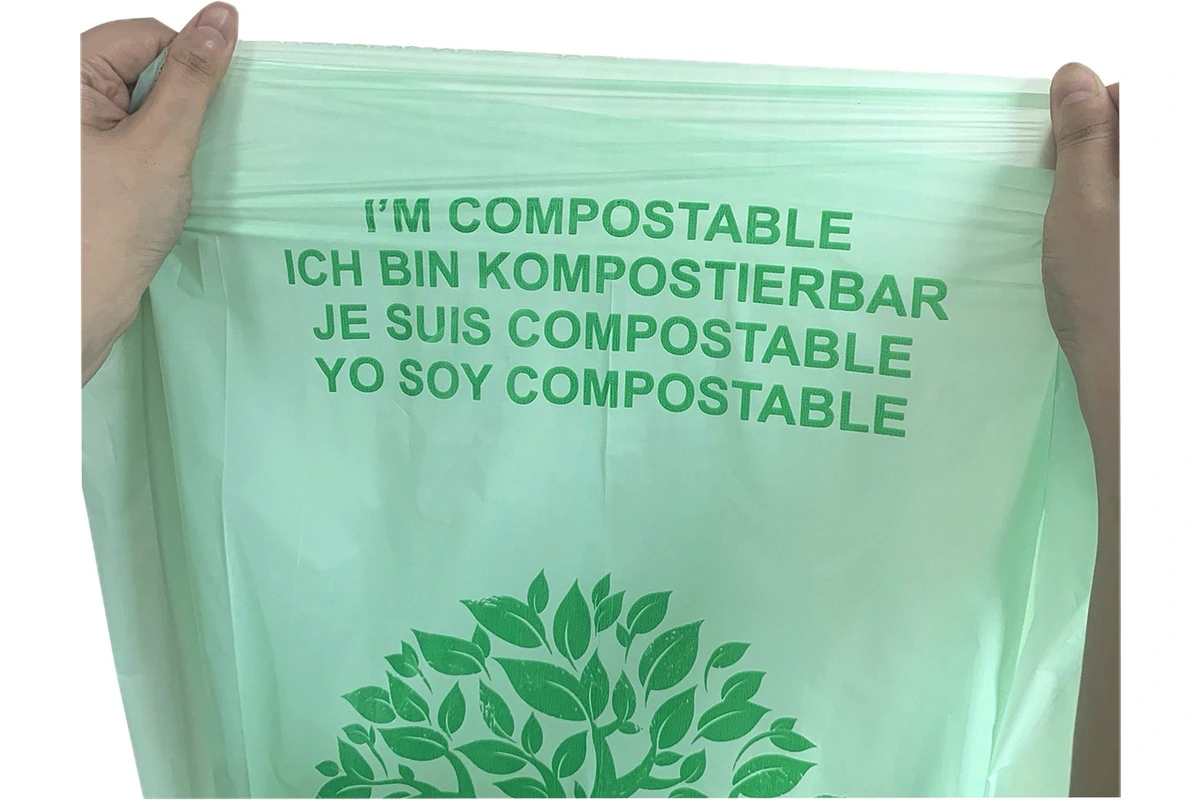
Hands holding the top of a pale green bag printed with compostable wording.

Print the Right Waste and Stock Information

Keep the bag’s intended use clear. Put size references and pack counts on the agreed labels or carton marks.

  • Bag color
    If your collection team uses different colors for different waste streams, specify the color for this liner.
  • Printed markings
    Place the bag identification where staff can see it after the liner folds over the rim.
  • Disposal wording
    Ask the collection operator what it accepts before adding organics instructions to the film.
  • Carton quantities
    Specify rolls per carton and carton marks for stock handling and distribution.

The Bottom Seal and the Waste Inside

Try the proposed film with the bin, contents and lifting routine staff will use on a normal collection day.
Film Formulation for the Liner

We can review PBAT/starch compounds and suitable PLA/PBAT/starch blends for the liner. Include the expected waste load and the bottom seal when specifying the thickness.

Discuss the Material

Comparing an Existing PE Liner

Fill a sample and your current PE liner in the same bin. Compare how each one folds over the rim, closes and lifts without straining the bottom seam.

Review Your Reference Bag

Compost Collection Requirements

We currently have no compostability certificate or test report for the finished liner. Ask the organics collection operator which finished bags it accepts before ordering for that service.

Discuss Required Evidence
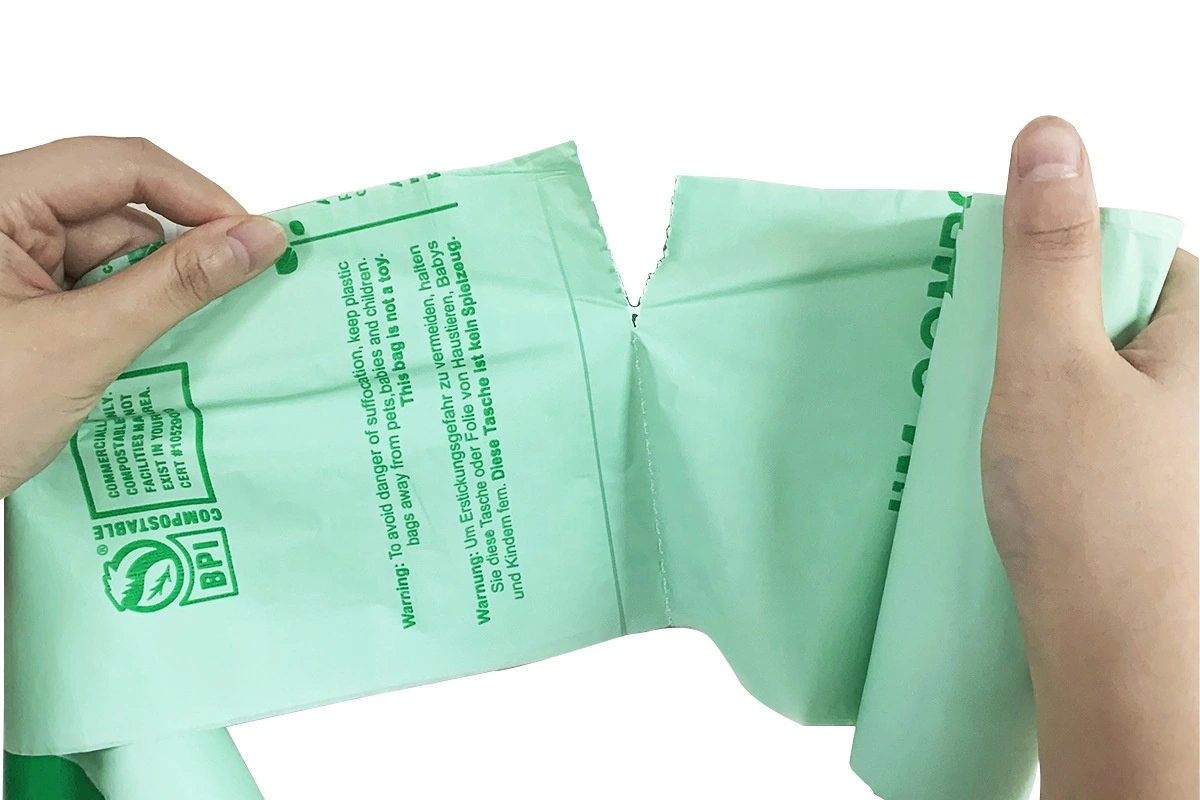
Hands separating a pale green printed bag from its roll.

How We Make a Liner Roll

We blow the film, add the ordered print and form the opening and base. For rolls, we perforate between liners and check the number wound onto each refill.

Trash Bag Size & Thickness Guide

Use the rim and depth measurements here to narrow down a sample size. Leave enough length to reach the bottom, fold over the rim and close the full bag.

We quote film thickness as the total of both bag walls in microns (µm). The table gives reference figures. Confirm how each was measured before using it for an order.

Swipe the table sideways to view every column.

Reference dimensions in centimeters and thickness in microns
Bag styleReference size (cm)Reference thickness (µm)
Drawstring bag43 × 4525
Drawstring bag43 × 4725
Drawstring bag45 × 5028
Drawstring bag50 × 6030
Drawstring bag51 × 6228
Drawstring bag60.5 × 74.530
Flat-top bag(32 + 16 × 2) × 9022
Flat-top bag(41 + 20.5 × 2) × 10023

Send the Bin Size and Bag Quantity

Send the bin measurements, usual contents and desired closure. For rolls, include the bag count. Production and sample times below exclude shipping.

Get a Custom Quote
1,000 pcs
Minimum order
3–5 days
Custom samples after payment
7–9 days
Production after payment

Questions before Ordering Bin Liners

Measure both openings and depths. Two bins with the same volume can need different liner widths or lengths, especially if staff fold the liner over the rim before filling it.
The minimum is 1,000 individual bags. List the total number of bags and the number you want on each roll so we can quote the packing correctly.
Send the holder measurements, core size and the width and diameter of the roll you use now. Check the sample on the holder because film thickness and bag count change the wound diameter.
Ask the program operator whether it accepts that finished liner and what evidence it needs. We currently have no compostability certificate or test report for the finished liner.
Existing samples are free. A custom liner sample costs US$30–50 and takes 3–5 days to make after payment. The full fee is refunded with a bulk order. Shipping is separate. See the liner sampling and approval details.
Allow 7–9 days for production after payment and additional time for shipping. Confirm the liner size, bags per roll and carton counts before the run. See the bulk-production and dispatch process.